
If rising utility bills are taking a heavy toll on your property bottom line, you are not alone. Whether you manage a multifamily community, a commercial center, or a manufactured housing park, utility expenses represent one of the most unpredictable operating costs in real estate today.
Fortunately, there is a proven strategy that restores financial predictability while promoting sustainability across your property: utility submetering.
In this guide, we break down everything you need to know about utility submetering in plain English. You will learn how it works, why it beats traditional allocation methods, and how it dramatically increases your property value.
What Is Utility Submetering?
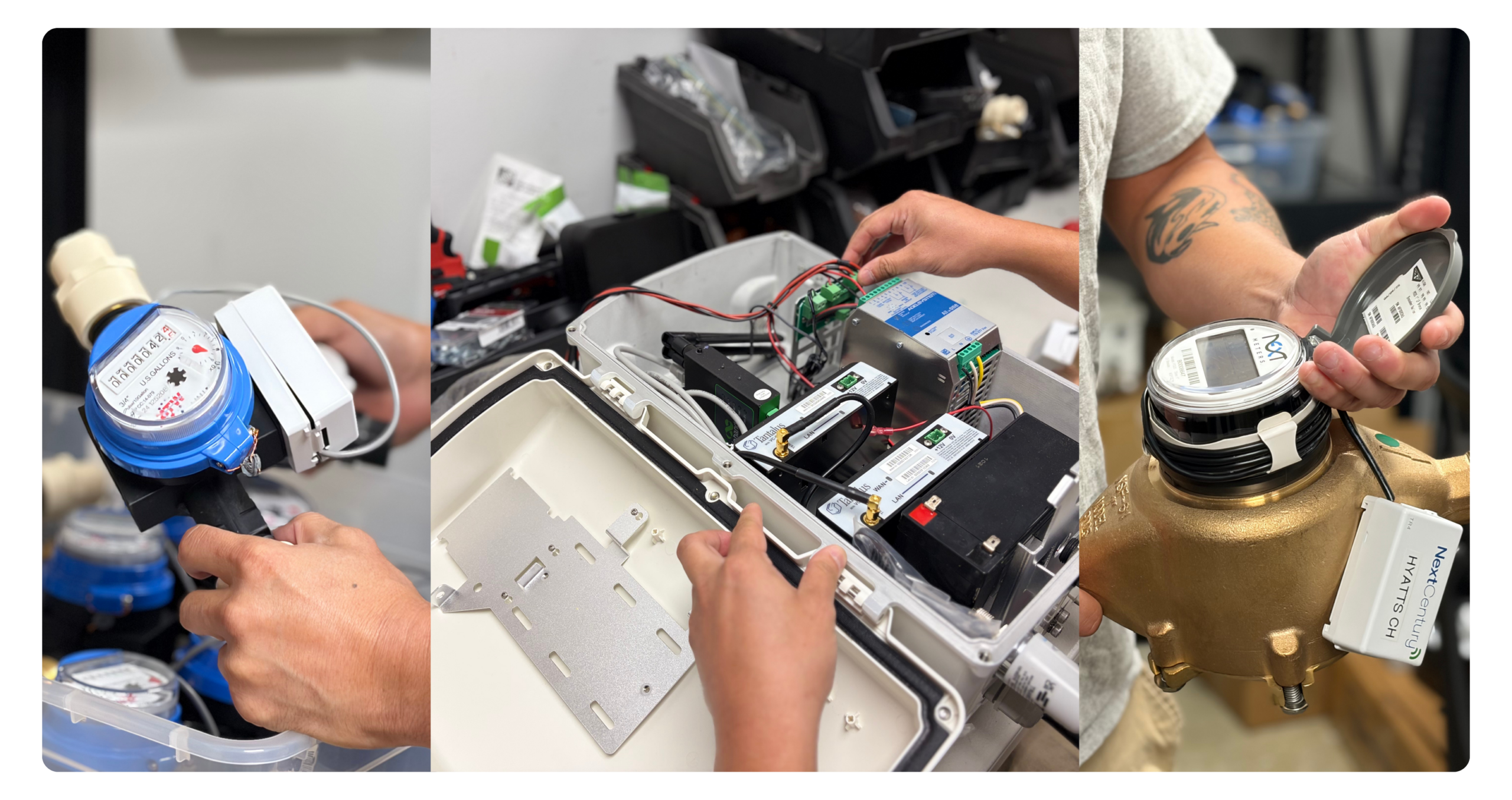
At its core, utility submetering is the process of installing secondary meters downstream from a master utility meter. While the local utility company measures the total consumption of the entire building, submeters measure the exact amount of water, electricity, or gas used by each individual unit or space.
When residents pay for utilities on a single combined invoice, conscientious residents end up paying for neighbor long showers or inefficient air conditioning units. Submetering solves this inequality instantly.
Key Submetering Benefits:
Direct Measurement: Captures actual consumption for each individual resident or unit.
Fair Billing: Residents only pay for what they personally consume, eliminating unfair subsidization.
Conservation Incentive: Visibility into usage encourages residents to conserve energy and water.
Leak Detection: Wireless submetering systems monitor flow in real time, alerting management to leaks before catastrophic water damage occurs.
Submetering vs RUBS: Understanding Your Options
Property managers often ask about the difference between a direct submetering system and a Ratio Utility Billing System (RUBS). Both aim to recover utility costs, but they operate quite differently.
Utility Submetering (The Gold Standard)
Submetering relies on physical hardware installed at each unit. A smart transmitter sends precise reading data to a central gateway, which generates exact monthly statements based on actual consumption.
Pros: Highest cost recovery rate (typically 90% to 95%+), strongest resident satisfaction, maximum energy and water conservation (typically a 15% to 30% drop in usage).
Cons: Requires upfront hardware installation and initial setup.
Ratio Utility Billing System (RUBS)
RUBS is a software based calculation method that allocates the master utility bill among residents using an industry formula based on square footage, occupant count, or bed count.
Pros: Zero hardware costs and quick setup. It is ideal for older properties where plumbing configuration makes physical submeter installation challenging.
Cons: Lower conservation impact and potential resident pushback since bills are estimated rather than directly measured.
While RUBS is an excellent stepping stone for properties with complex plumbing layouts, submetering remains the gold standard. Direct measurement offers the highest return on investment, eliminates billing disputes, and provides unmatched protection against undetected leaks.
The Financial Impact: How Submetering Drives Property Value
Implementing a submetering system delivers immediate financial returns that extend far beyond monthly bill collection.
1. Immediate Operating Cost Recovery
Unrecovered utility costs act as a constant drain on profits. Shifted from an operating expense to a pass through cost, utility recovery directly increases your Net Operating Income (NOI).
2. Substantial Cap Rate Expansion
Because commercial real estate valuations are tied directly to NOI, even modest utility recovery generates substantial equity. For instance, at a 6% Cap Rate, every $10,000 recovered in annual utility costs adds roughly $166,667 in asset value to your property.
3. Leak Protection and Risk Mitigation
Undetected leaks (such as running toilets or cracked pipes) can destroy thousands of dollars in utility budgets overnight. Modern wireless submetering systems feature automated leak detection alerts, allowing maintenance personnel to fix issues before costly structural damage occurs.
How Does a Submetering Project Work?
Transitioning your property to submetered utilities is straightforward when backed by an experienced partner. You do not need to be a plumbing or electrical expert because your utility provider handles the technical heavy lifting.
The Typical 4 Step Process:
Property Feasibility Evaluation: Engineering specialists review your plumbing and electrical architecture, local regulatory rules, and rate structures to design the right system.
Hardware Selection and Installation: Certified technicians install high accuracy, wireless meters for water, electric, or gas without disrupting your daily management operations.
Automated Reading and Data Capture: Transmitters continuously log usage data and send readings securely via cellular or internet gateways.
Billing and Utility Management: Automated software generates individual, easy to read monthly statements directly for your residents, collecting payments and remitting recovered funds back to your account.
Making the Switch to Seamless Utility Management
Utility submetering is more than a billing tool. It is a long term asset management strategy that lifts property values, supports environmental sustainability, and brings complete transparency to your community. By measuring usage accurately, you create a fair living environment for residents while building a stronger financial foundation for your real estate investments.